Jump to content

I've been wondering. My computer has a motherboard cutout that was designed specifically for this but I haven't bothered to try this yet. What I'd like to try at some point is cooling the backside of the mobo, because it's quite warm. Now I know it's been tried before but the people who did it weren't very clear about whether the performance potential actually increased, or whether they just had lower temps from the socket temp sensor. I wonder how doing that would affect performance of not only the CPU, but also of the VRMs, the RAM (cooling the copper traces would, in my imagination, make them transmit the signal better), and such.


Any thoughts?

I cannot be held responsible for any bad advice given.

I've no idea why the world is afraid of 3D-printed guns when clearly 3D-printed crossbows would be more practical for now.

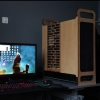
My rig: The StealthRay. Plans for a newer, better version of its mufflers are already being made.

Link to comment
https://linustechtips.com/topic/288396-cooling-motherboard-backside/
Share on other sites

Link to post
Share on other sites

the motherboard cutout is for mounting the CPU backplate without having to remove your motherboard, not for sticking heatsinks to the back

NEW PC build: Blank Heaven   minimalist white and black PC     Old S340 build log "White Heaven"        The "LIGHTCANON" flashlight build log        Project AntiRoll (prototype)        Custom speaker project

Spoiler

Ryzen 3950X | AMD Vega Frontier Edition | ASUS X570 Pro WS | Corsair Vengeance LPX 64GB | NZXT H500 | Seasonic Prime Fanless TX-700 | Custom loop | Coolermaster SK630 White | Logitech MX Master 2S | Samsung 980 Pro 1TB + 970 Pro 512GB | Samsung 58" 4k TV | Scarlett 2i4 | 2x AT2020


Link to post
Share on other sites

I've been wondering. My computer has a motherboard cutout that was designed specifically for this but I haven't bothered to try this yet. What I'd like to try at some point is cooling the backside of the mobo, because it's quite warm. Now I know it's been tried before but the people who did it weren't very clear about whether the performance potential actually increased, or whether they just had lower temps from the socket temp sensor. I wonder how doing that would affect performance of not only the CPU, but also of the VRMs, the RAM (cooling the copper traces would, in my imagination, make them transmit the signal better), and such.


Any thoughts?

it may work to some level 

Link to post
Share on other sites

I've been wondering. My computer has a motherboard cutout that was designed specifically for this but I haven't bothered to try this yet. What I'd like to try at some point is cooling the backside of the mobo, because it's quite warm. Now I know it's been tried before but the people who did it weren't very clear about whether the performance potential actually increased, or whether they just had lower temps from the socket temp sensor. I wonder how doing that would affect performance of not only the CPU, but also of the VRMs, the RAM (cooling the copper traces would, in my imagination, make them transmit the signal better), and such.

It does work, but it's not worth the extra noise and money required to stamp another fan mount onto the case. Cases like the Antec Eleven Hundred had a fan mount behind the mobo tray, barely anyone used it.

Desktop: Intel Core i5 2380P (2400 w/o iGPU), MSI H61, 8GB RAM, 256GB SP610, 500GB WD Blue, HIS R9 280, Antec TruePower Classic 550W, Inwin MANA 134, QNIX QX2710, CM QuickFire Rapid, Logitech G402


Laptop: Toshiba Satellite L40D, AMD A6-6310, 6GB RAM, 500GB HDD, Radeon R4 Graphics, 14" 1366x768


Phone: iPhone 6 Space Gray 64GB, T-Mobile $60/mo 3GB plan


Link to post
Share on other sites

Create an account or sign in to comment

You need to be a member in order to leave a comment

Create an account

Sign up for a new account in our community. It's easy!

Register a new account

Sign in

Already have an account? Sign in here.

Sign In Now

×