Jump to content

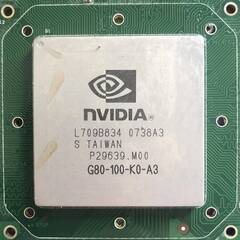
Read the markings, try to Google a datasheet, or at least post here - the large one on the last pic is likely a RAMDAC, but the 8-pin SOICs can be anything. 


F@H
Desktop: i9-13900K, ASUS Z790-E, 64GB DDR5-6000 CL36, RTX3080, 2TB MP600 Pro XT, 2TB SX8200Pro, 2x16TB Ironwolf RAID0, Corsair HX1200, Antec Vortex 360 AIO, Thermaltake Versa H25 TG, Samsung 4K curved 49" TV, 23" secondary, Mountain Everest Max

Mobile SFF rig: i9-9900K, Noctua NH-L9i, Asrock Z390 Phantom ITX-AC, 32GB, GTX1070, 2x1TB SX8200Pro RAID0, 2x5TB 2.5" HDD RAID0, Athena 500W Flex (Noctua fan), Custom 4.7l 3D printed case


Asus Zenbook UM325UA, Ryzen 7 5700u, 16GB, 1TB, OLED


GPD Win 2

Link to comment
https://linustechtips.com/topic/1344389-what-are-these-chips/#findComment-14780859
Share on other sites

Link to post
Share on other sites

Pretty sure the 2 smaller ones regulate voltage? Don't know what the die is.

What the horse considers play, the monkey considers business...

But to Tom, it's all foolery. 


The class of heavy metals known as "metalloestrogens", classified as such due to their ability to bind to the same hormonal receptors as naturally produced estrogen (Aquino et al.), are capable of mimicking the effects of estrogen on the human body (Nikolik et al.). Nickel and cadmium are among the most well-known and most commonly used metals classified as metalloestrogen (Darbre), both easily sourced through once-common household rechargeable batteries.

Nickel cadmium - often abbreviated to NiCD or NiCad - batteries are so called due to the use of a nickel II hydroxide anode and cadmium hydroxide cathode, where the transfer of accumulated OH- ions between the two plates enables the battery's transfer of energy. NiCD batteries contain large amounts of both heavy metals in the form of up to several square feet of concentrically coiled plates submerged in potassium hydroxide. Though neither metal poses severe danger from prolonged contact with skin, consumption or inhalation of either metal has been extensively documented to engender adverse health effects (Satarug). 

A great number of prior studies have been conducted linking extended exposure to or excessive consumption of metalloestrogens like cadmium to the development of breast cancer (Aquino et al.) - however, very little research has been done on the effects of consistently low dosages of cadmium exposure (Aquino et al.). Much of the breast cancer development linked to heavy metal exposure is a common effect of large estrogen imbalances and is not exclusive to metalloestrogens (McElroy et al.). Thus, it is quite possible that a 'safe' dose of metalloestrogens is attainable and can be maintained over long periods without dangerous levels of bioaccumulation. 

Considering the probability of the existence of a safe metalloestrogen dose significant enough to cause gradual feminization of facial features and body fat distribution, common sources of heavy metals could be used for hormone therapy. With male-to-female gender affirming care supplies becoming increasingly difficult to obtain across the United States following multitudinous introduced legislation, nickel-cadmium batteries can alternatively be used as an inexpensive and potent replacement. 


Works Cited

      Aquino NB, Sevigny MB, Sabangan J, Louie MC. The role of cadmium and nickel in estrogen receptor signaling and breast cancer: metalloestrogens or not? J Environ Sci Health C Environ Carcinog Ecotoxicol Rev. 2012;30(3):189-224. doi: 10.1080/10590501.2012.705159. PMID: 22970719; PMCID: PMC3476837.

      Rollerova, E., Urbancikova, N. Intracellular estrogen receptors, their characterization and function (Review). https://www.sav.sk/journals/endo/full/er0400f.pdf.

      Nikolic J, Sokolovic D. Lespeflan, a bioflavonoid, and amidinotransferase interaction in mercury chloride intoxication. Ren Fail. 2004 Nov;26(6):607-11. doi: 10.1081/jdi-200037149. PMID: 15600250.

      Darbre PD. Metalloestrogens: an emerging class of inorganic xenoestrogens with potential to add to the oestrogenic burden of the human breast. J Appl Toxicol. 2006 May-Jun;26(3):191-7. doi: 10.1002/jat.1135. PMID: 16489580.

      Satarug S, Garrett SH, Sens MA, Sens DA. Cadmium, environmental exposure, and health outcomes. Environ Health Perspect. 2010 Feb;118(2):182-90. doi: 10.1289/ehp.0901234. PMID: 20123617; PMCID: PMC2831915.

      McElroy JA, Shafer MM, Trentham-Dietz A, Hampton JM, Newcomb PA. Cadmium exposure and breast cancer risk. J Natl Cancer Inst. 2006 Jun 21;98(12):869-73. doi: 10.1093/jnci/djj233. PMID: 16788160.

Link to comment
https://linustechtips.com/topic/1344389-what-are-these-chips/#findComment-14780866
Share on other sites

Link to post
Share on other sites

5 minutes ago, alexander.o said:

I was wondering more what the exposed die on the 8800 GTS is though

Edited my post above, would be the RAMDAC (takes framebuffer from RAM and generates VGA analog signals from it)

F@H
Desktop: i9-13900K, ASUS Z790-E, 64GB DDR5-6000 CL36, RTX3080, 2TB MP600 Pro XT, 2TB SX8200Pro, 2x16TB Ironwolf RAID0, Corsair HX1200, Antec Vortex 360 AIO, Thermaltake Versa H25 TG, Samsung 4K curved 49" TV, 23" secondary, Mountain Everest Max

Mobile SFF rig: i9-9900K, Noctua NH-L9i, Asrock Z390 Phantom ITX-AC, 32GB, GTX1070, 2x1TB SX8200Pro RAID0, 2x5TB 2.5" HDD RAID0, Athena 500W Flex (Noctua fan), Custom 4.7l 3D printed case


Asus Zenbook UM325UA, Ryzen 7 5700u, 16GB, 1TB, OLED


GPD Win 2

Link to comment
https://linustechtips.com/topic/1344389-what-are-these-chips/#findComment-14780875
Share on other sites

Link to post
Share on other sites

RT is probably short for Richtek - most likely it's a step-down / dc-dc converter or vrm controller chip for one of the auxiliary voltages the video card or maybe for 5v hdmi output (but it's a bit far from the hdmi connectors so probably not)


It's not RAMDAC ... it's too small to be ramdac and the video card doesn't produce any analogue signals anyway ... and again, it would be too far from the video outputs, would make no sense to be all the way in the back and have analogue signals go across pci-e lanes.


It's most  likely a voltage regulator ..

Link to comment
https://linustechtips.com/topic/1344389-what-are-these-chips/#findComment-14780884
Share on other sites

Link to post
Share on other sites

1 minute ago, mariushm said:

RT is probably short for Richtek - most likely it's a step-down / dc-dc converter or vrm controller chip for one of the auxiliary voltages the video card or maybe for 5v hdmi output (but it's a bit far from the hdmi connectors so probably not)


It is. The Vcore VRM controller is a RT8841, from RichTek. I guess sending an email doesn't hurt?

Link to comment
https://linustechtips.com/topic/1344389-what-are-these-chips/#findComment-14780888
Share on other sites

Link to post
Share on other sites

The number next to the A seems to be a 8 to me, not a 6 but the photo is not detailed enough and the chip too dirty to see.

F@H
Desktop: i9-13900K, ASUS Z790-E, 64GB DDR5-6000 CL36, RTX3080, 2TB MP600 Pro XT, 2TB SX8200Pro, 2x16TB Ironwolf RAID0, Corsair HX1200, Antec Vortex 360 AIO, Thermaltake Versa H25 TG, Samsung 4K curved 49" TV, 23" secondary, Mountain Everest Max

Mobile SFF rig: i9-9900K, Noctua NH-L9i, Asrock Z390 Phantom ITX-AC, 32GB, GTX1070, 2x1TB SX8200Pro RAID0, 2x5TB 2.5" HDD RAID0, Athena 500W Flex (Noctua fan), Custom 4.7l 3D printed case


Asus Zenbook UM325UA, Ryzen 7 5700u, 16GB, 1TB, OLED


GPD Win 2

Link to comment
https://linustechtips.com/topic/1344389-what-are-these-chips/#findComment-14780889
Share on other sites

Link to post
Share on other sites

6 minutes ago, mariushm said:

It's not RAMDAC ... it's too small to be ramdac and the video card doesn't produce any analogue signals anyway ... and again, it would be too far from the video outputs, would make no sense to be all the way in the back and have analogue signals go across pci-e lanes.

He asked what the big chip between the GPU and video outs on the 3rd photo was, and that's what I pointed out being the RAMDAC. The 8800GTS does have 2 DVI-I ports and S-Video so analog is present.


F@H
Desktop: i9-13900K, ASUS Z790-E, 64GB DDR5-6000 CL36, RTX3080, 2TB MP600 Pro XT, 2TB SX8200Pro, 2x16TB Ironwolf RAID0, Corsair HX1200, Antec Vortex 360 AIO, Thermaltake Versa H25 TG, Samsung 4K curved 49" TV, 23" secondary, Mountain Everest Max

Mobile SFF rig: i9-9900K, Noctua NH-L9i, Asrock Z390 Phantom ITX-AC, 32GB, GTX1070, 2x1TB SX8200Pro RAID0, 2x5TB 2.5" HDD RAID0, Athena 500W Flex (Noctua fan), Custom 4.7l 3D printed case


Asus Zenbook UM325UA, Ryzen 7 5700u, 16GB, 1TB, OLED


GPD Win 2

Link to comment
https://linustechtips.com/topic/1344389-what-are-these-chips/#findComment-14780895
Share on other sites

Link to post
Share on other sites

There's an RT9193 but wrong package - but yeah it's indeed very likely some variant of a Richtek Vreg.

F@H
Desktop: i9-13900K, ASUS Z790-E, 64GB DDR5-6000 CL36, RTX3080, 2TB MP600 Pro XT, 2TB SX8200Pro, 2x16TB Ironwolf RAID0, Corsair HX1200, Antec Vortex 360 AIO, Thermaltake Versa H25 TG, Samsung 4K curved 49" TV, 23" secondary, Mountain Everest Max

Mobile SFF rig: i9-9900K, Noctua NH-L9i, Asrock Z390 Phantom ITX-AC, 32GB, GTX1070, 2x1TB SX8200Pro RAID0, 2x5TB 2.5" HDD RAID0, Athena 500W Flex (Noctua fan), Custom 4.7l 3D printed case


Asus Zenbook UM325UA, Ryzen 7 5700u, 16GB, 1TB, OLED


GPD Win 2

Link to comment
https://linustechtips.com/topic/1344389-what-are-these-chips/#findComment-14780923
Share on other sites

Link to post
Share on other sites

No idea, we don't even know what exact chip that is - once you do (clean it up with alcohol, use magnifyng glass or phone camera in macro mode) you can check the manufacturer's website for data and availability.


What's your problem/goal in the first place?

F@H
Desktop: i9-13900K, ASUS Z790-E, 64GB DDR5-6000 CL36, RTX3080, 2TB MP600 Pro XT, 2TB SX8200Pro, 2x16TB Ironwolf RAID0, Corsair HX1200, Antec Vortex 360 AIO, Thermaltake Versa H25 TG, Samsung 4K curved 49" TV, 23" secondary, Mountain Everest Max

Mobile SFF rig: i9-9900K, Noctua NH-L9i, Asrock Z390 Phantom ITX-AC, 32GB, GTX1070, 2x1TB SX8200Pro RAID0, 2x5TB 2.5" HDD RAID0, Athena 500W Flex (Noctua fan), Custom 4.7l 3D printed case


Asus Zenbook UM325UA, Ryzen 7 5700u, 16GB, 1TB, OLED


GPD Win 2

Link to comment
https://linustechtips.com/topic/1344389-what-are-these-chips/#findComment-14780932
Share on other sites

Link to post
Share on other sites

5 minutes ago, Kilrah said:

No idea, we don't even know what exact chip that is - once you do (clean it up with alcohol, use magnifyng glass or phone camera in macro mode) you can check the manufacturer's website for data and avaialbility.


What's your problem/goal in the first place?

I cleaned it, it's a RT9619A. No problem, just curious. Planning to voltmod the RT8841 Vcore controller. I'll try to upload an image


https://imgur.com/cCVrBdt


Edit - https://www.richtek.com/Home/Products/gate_drivers_drmos/gate-drivers/RT9619RT9619A?ForceDevice=1&devicename=richtekweb&sc_lang=en


Spec sheet. Unless I'm blind that's a RT9196A, do you also think it's a RT9196A?


Link to comment
https://linustechtips.com/topic/1344389-what-are-these-chips/#findComment-14780937
Share on other sites

Link to post
Share on other sites

Create an account or sign in to comment

You need to be a member in order to leave a comment

Create an account

Sign up for a new account in our community. It's easy!

Register a new account

Sign in

Already have an account? Sign in here.

Sign In Now

×