Jump to content

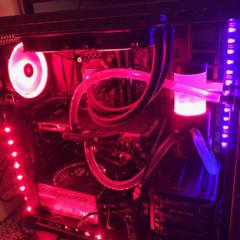
Fairly new to overclocking but I was able to get my 8700k up to 5.0GHz on my MSI Z370 Gaming M5 motherboard. It might go further but that’s plenty fast for me plus the BIOS seemingly automatically upped the vcore to 1.392v when I set the multiplier to 50 which it didn’t warn me about at all and I didn’t even discover until I went back into the bios days later.  My 2 questions are: 1.392 seems unnecessarily high even if it is watercooled, and 2 is it possible to make it behave like it did out of the box where it idles at 3.7GHz and a significantly lower voltage but turbos up to 5, because even when I set the turbo multiplier to 50 it still idles at 5GHz on the desktop with just hardware monitor open and very minimal background processes. 

Link to comment
https://linustechtips.com/topic/945415-variable-speed-oc-for-8700k/
Share on other sites

Link to post
Share on other sites

49 minutes ago, Laxmantim said:

1.392 seems unnecessarily high even if it is watercooled,

you can lower that with offset mode in CPU core voltage control. say - 0.15V will put you to about 1.242V, though better lower it at 0.02V steps and give it a test after each try.


51 minutes ago, Laxmantim said:

and 2 is it possible to make it behave like it did out of the box where it idles at 3.7GHz and a significantly lower voltage but turbos up to 5, because even when I set the turbo multiplier to 50 it still idles at 5GHz on the desktop with just hardware monitor open and very minimal background processes. 

Enable C-states, speedstep and EIST. I'm not sure if all of these exists in Coffee Lake though.

CPU: i7-2600K 4751MHz 1.44V (software) --> 1.47V at the back of the socket Motherboard: Asrock Z77 Extreme4 (BCLK: 103.3MHz) CPU Cooler: Noctua NH-D15 RAM: Adata XPG 2x8GB DDR3 (XMP: 2133MHz 10-11-11-30 CR2, custom: 2203MHz 10-11-10-26 CR1 tRFC:230 tREFI:14000) GPU: Asus GTX 1070 Dual (Super Jetstream vbios, +70(2025-2088MHz)/+400(8.8Gbps)) SSD: Samsung 840 Pro 256GB (main boot drive), Transcend SSD370 128GB PSU: Seasonic X-660 80+ Gold Case: Antec P110 Silent, 5 intakes 1 exhaust Monitor: AOC G2460PF 1080p 144Hz (150Hz max w/ DP, 121Hz max w/ HDMI) TN panel Keyboard: Logitech G610 Orion (Cherry MX Blue) with SteelSeries Apex M260 keycaps Mouse: BenQ Zowie FK1


Model: HP Omen 17 17-an110ca CPU: i7-8750H (0.125V core & cache, 50mV SA undervolt) GPU: GTX 1060 6GB Mobile (+80/+450, 1650MHz~1750MHz 0.78V~0.85V) RAM: 8+8GB DDR4-2400 18-17-17-39 2T Storage: HP EX920 1TB PCIe x4 M.2 SSD + Crucial MX500 1TB 2.5" SATA SSD, 128GB Toshiba PCIe x2 M.2 SSD (KBG30ZMV128G) gone cooking externally, 1TB Seagate 7200RPM 2.5" HDD (ST1000LM049-2GH172) left outside Monitor: 1080p 126Hz IPS G-sync


Desktop benching:

Cinebench R15 Single thread:168 Multi-thread: 833 

SuperPi (v1.5 from Techpowerup, PI value output) 16K: 0.100s 1M: 8.255s 32M: 7m 45.93s

Link to post
Share on other sites

Thanks for the help! Regarding the voltage I will aim to step it down closer to the 1.242 you mentioned, that seems a lot safer, you mentioned using offset mode, is that any different than just adjusting the voltage? And if so what is the benefit? Also I have speedstep and EIST enabled but I haven’t seen C-states in the bios anywhere maybe that’s what I’m missing. I’ll give that a shot and post and update in a couple hours, thanks again for your help!

Link to post
Share on other sites

Update: couldn’t find Cstates in the bios but there was one setting (can’t remember what it was called sorry) that I changed that allowed the clock to fluctuate between 4.7-5.0 so that’s progress, however I was only able to get the VCore down to 1.355, and I had to bring the cache speed down from 4.8->4.7 because I was getting blue screens in Aida 64 stress test, I noticed the north bridge was only running at 4.7GHz before I slowed down the cache could that slower speed be contributing to instability and is it possible to adjust that? I would like to speed the cache back up but right now the system is stable at 5GHz 4.7cache and 1.355vcore

Link to post
Share on other sites

Create an account or sign in to comment

You need to be a member in order to leave a comment

Create an account

Sign up for a new account in our community. It's easy!

Register a new account

Sign in

Already have an account? Sign in here.

Sign In Now

×