Jump to content

Ok. I have a few questions please don't crucify me, I'm just new to all this. I was given an MSI Vortex G25 by my work as my workstation PC because it had a GeForce GTX 1070, an i7, decent cooling and I upgraded the ram and SDD and HDD for video editing. But after I left they told me to keep the PC.  Here's my question. It has an MSI Z370 (custom laptop converted) motherboard with an i7 Coffee Lake processor in it but I'm not sure if that's Mini ATX, Mini ITX, or what have you. 


I really want to take the internals out of the MSI Stock case and put it all into a more traditional desktop case. But I have NO idea what case I could do with with or even what components of need to make it work successfully. 


Here are the specs as much as I can find.  (FROM TOMS GUIDE)


MSI loaded the G25 Vortex 8RD with an Intel Core i5-8400 six-core processor, which is seated in a custom MSI Z370 motherboard and cooled with the company’s patented Silent Storm Cooling Pro 3. This consists of a series of copper heat pipes (four for the CPU, three over the GPU, and one for its VRMs) that run into a set of dissipation fins. These are cooled by two fans that pull in air from the bottom (left, when upright) of the chassis and exhaust the heat out the left side (top, when upright). The cooling resembles that of a laptop more than a desktop, but we don’t see much risk of thermal throttling; the interior of the chassis is spacious and has plenty of airflow.


The GeForce GTX 1060 6GB graphics card is an MXM module, surprisingly. Many SFF OEMs opt for chip-down (soldered) solutions, but MSI has higher-priced models of the G25 Vortex available with more powerful graphics, and the use of MXM likely makes the manufacturing process easier. It also makes it so that end users can upgrade the graphics down the line (after the factory warranty is expired; accessing the GPU will void it), so long as they can keep the new GPU in the same power envelope (150W). However, the downside is that MXM cards usually add a hefty premium to the total bill (at least more than a chip-down setup) due to the increased production cost for the OEM.


The G25 Vortex 8RD is equipped with 16GB of DDR4-2400 with a CAS latency of 17-17-17-39, but it comes in the form of a single SO-DIMM module, cutting out dual-channel operation and likely hamstringing the memory subsystem on bandwidth-intensive workloads. However, users will find it easy enough to access the memory DIMM slots (there are four of them, two on each side of the device) and upgrade the RAM configuration to something more suitable, if they so desire. Average consumers won’t notice the lack of dual-channel memory, but an enthusiast eye knows that two modules are always better than one, and it’s somewhat disappointing to see MSI intentionally nerf a perfectly good Z370 platform with single-channel memory operation.


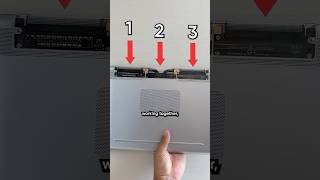
The storage is accessible behind the smooth side panel (top horizontally, right side vertically), which hides two of the four SO-DIMM memory slots in addition to two M.2 interfaces and a 2.5” 1TB 7,200RPM HDD. One of the M.2 slots is occupied with a 256GB Samsung PM871a M.2 SATA 6GB/s SSD. This client model ships to OEMs and is rated for up to 540MB/s and 520MB/s sequential read/write speeds, as well as up to 97K and 79K random read/write IOPS, respectively. If you crave more storage speed, the M.2 slots also support PCIe 3.0 x 4 SSDs that you can purchase and install yourself.


I know this seems like a really weird idea but I really want to do this.  Any help (not discouragement) at all would be greatly appreciated.


Thank you.  

Link to comment
https://linustechtips.com/topic/1169517-msi-vortex-g25-conversion/
Share on other sites

Link to post
Share on other sites

  • 8 months later...

Create an account or sign in to comment

You need to be a member in order to leave a comment

Create an account

Sign up for a new account in our community. It's easy!

Register a new account

Sign in

Already have an account? Sign in here.

Sign In Now

×